


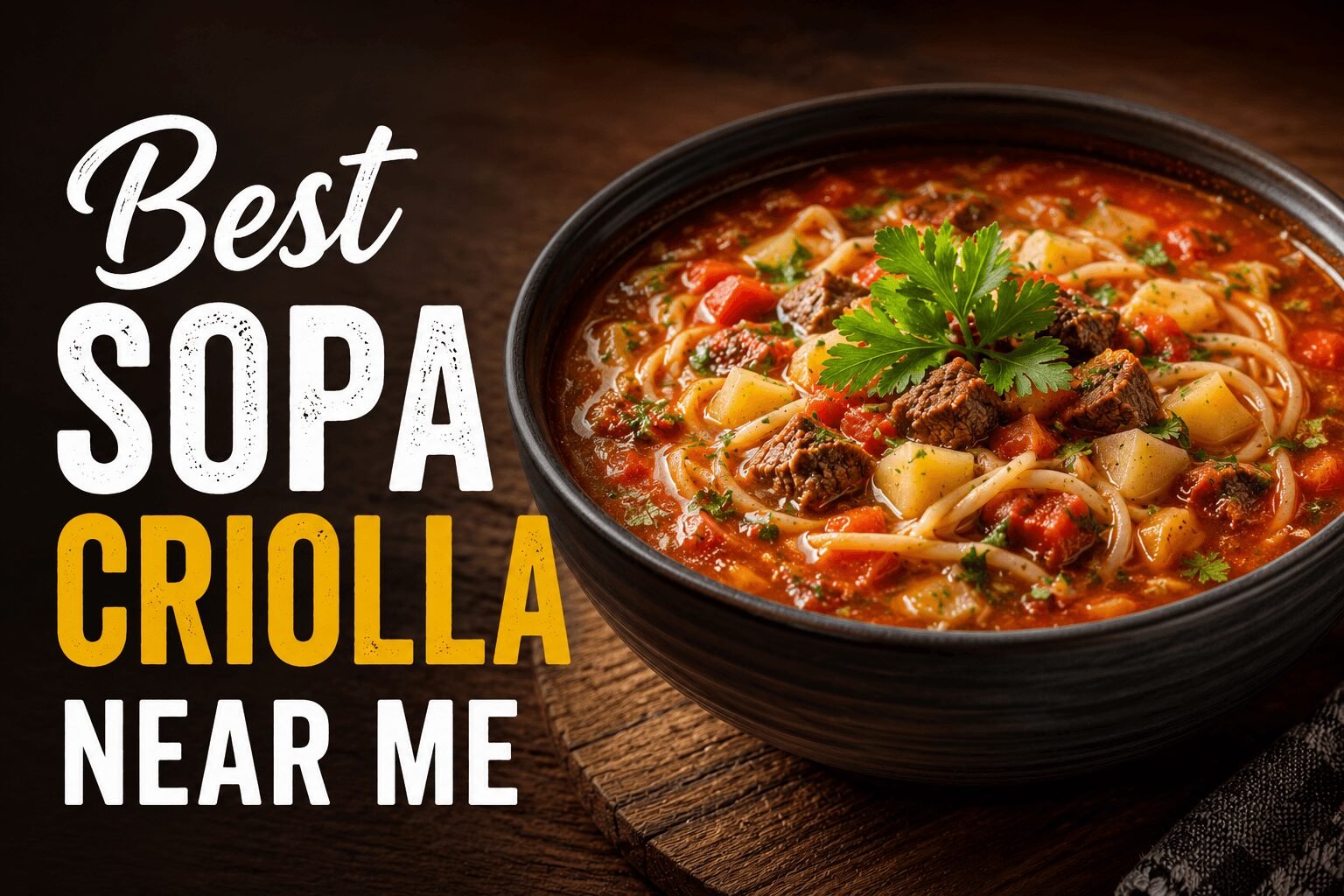




If you have ever typed “best sopa criolla near me” into your phone late on a rainy evening, you already understand the pull of this dish. Sopa criolla is one of those meals that feels like a warm hand on your shoulder. It is comforting, savory, and a little nostalgic, even if you are trying it for the very first time. This guide walks through what sopa criolla actually is, why it has become such a searched-for comfort food, and how you can find a version near you that actually lives up to the name.
What Exactly Is Sopa Criolla?
Sopa criolla is a traditional Peruvian noodle soup built around a beef broth base, tender spaghetti noodles, ground beef, a poached or fried egg, and evaporated milk stirred in near the end of cooking. That last ingredient is what gives the soup its signature pale, creamy color and slightly rounded flavor. It sounds unusual on paper, but the combination works beautifully, especially when the broth has been simmered long enough to develop real depth.
The dish is often associated with rainy days, cold nights, or moments when someone needs a little extra care. Many families in Peru consider it a classic home-cooked meal rather than something you order in a fancy restaurant, which is part of why finding the best sopa criolla near me can sometimes feel harder than expected. Not every restaurant treats it with the same attention a grandmother would at home.
Why People Keep Searching for the Best Sopa Criolla Near Me
There is a simple reason so many people search for the best sopa criolla near me instead of just picking the closest restaurant on a map. This soup is deceptively difficult to get right. The broth needs time. The noodles need to be cooked properly so they do not turn mushy. The egg needs to be added at just the right moment. A rushed version can taste flat, watery, or overly salty, while a well-made bowl tastes layered and satisfying.
Because the dish relies so heavily on technique rather than exotic ingredients, quality varies a lot from kitchen to kitchen. That inconsistency is exactly why so many home cooks and food lovers turn to search engines, hoping to find the best sopa criolla near me rather than settling for a version that misses the mark.
The Origins and Cultural Roots of Sopa Criolla
Sopa criolla belongs to what Peruvians call “comida criolla,” a broad category of home-style cooking that blends Spanish, African, Indigenous, and later Chinese and Italian influences. This rich culinary heritage is one of the reasons Peruvian cuisine is celebrated around the world. This blending is part of what makes Peruvian cuisine so distinct. The noodles hint at Italian immigration into Peru during the nineteenth and twentieth centuries, while the technique of finishing a broth with milk reflects a very local, practical approach to stretching ingredients and adding richness without cream.
Traditionally, sopa criolla was considered a nourishing meal for children, the elderly, or anyone recovering from illness. It still carries that reputation today. Even now, many people associate the dish with being cared for, which explains why the emotional pull behind searching for the best sopa criolla near me is often just as strong as the craving for the actual flavor.
What Makes a Truly Great Bowl
Not all sopa criolla is created equal, and knowing what separates an average bowl from an excellent one can help you evaluate any place you are considering. The broth should taste rich and slightly beefy, not thin or watery. The noodles should be tender but not falling apart, holding their shape when lifted with a spoon. The egg, whether poached directly in the broth or added separately, should have a soft yolk that blends into the soup as you eat.
Seasoning matters too. A well-balanced bowl uses a touch of oregano, black pepper, and sometimes a hint of aji amarillo paste for subtle warmth without overwhelming heat. The evaporated milk should be stirred in gently near the end so it enriches the broth without curdling or dominating the other flavors. When all these elements come together, you understand instantly why people go out of their way searching for the best sopa criolla near me instead of settling for a generic soup special.
How to Evaluate Restaurants Claiming to Serve It
When you are trying to identify the best sopa criolla near me in your own city, a few practical signs can guide you. First, look at menus that specialize in Peruvian home-style cooking rather than a general Latin American menu that lists dozens of unrelated dishes. If you also enjoy fresh Peruvian-style salads before your soup, our guide to Best Ensalada Mixta Near Me can help you discover another authentic favorite worth trying. Specialization often signals that the kitchen understands the nuances of comida criolla rather than treating it as an afterthought.
Second, pay attention to how the broth is described. Restaurants that mention slow-simmered beef stock, house-made noodles, or fresh eggs tend to take the dish seriously. Third, reviews matter, but read them carefully. Comments that specifically mention the broth’s richness, noodle texture, or how the egg was cooked are far more useful than vague praise. These small details often reveal whether a place genuinely deserves the reputation of serving the best sopa criolla near me.
Timing and Freshness Play a Bigger Role Than You Might Think
Sopa criolla is not a dish that holds up well sitting in a warming tray for hours. Because the noodles continue absorbing broth over time, a bowl made fresh to order will almost always taste better than one prepared far in advance. If you are dining somewhere new, it can help to ask whether the soup is made per order or in large batches earlier in the day.
This timing detail is one of the most overlooked factors when people evaluate a restaurant. A place might have excellent ingredients and a talented cook, but if the soup sits too long before reaching your table, the noodles can turn soft and the broth can lose some of its brightness. Freshness truly is part of what defines quality here.
Pairing Sopa Criolla With the Right Sides
While sopa criolla is filling enough to stand on its own, many Peruvian restaurants pair it with simple sides that complement rather than compete with its flavor. A slice of crusty bread works well for soaking up the last bit of broth. Some places offer a small side salad with lime dressing to add a touch of acidity that balances the richness of the soup.
Beverage pairings tend to lean light as well. Chicha morada, a sweet purple corn drink, or a simple herbal tea often accompanies the meal, especially in colder weather. These small additions round out the experience and are worth considering when you are choosing where to eat, not just which restaurant has the most appealing menu description.
If you are planning a complete Peruvian dining experience, you may also want to explore the best Ensalada Mixta near you, as this fresh salad pairs beautifully with the rich and comforting flavors of sopa criolla.
Making It at Home When Dining Out Is Not an Option
Sometimes a local search does not turn up a satisfying option, especially in areas without a strong Peruvian food presence. In that case, making the dish at home is entirely realistic, even for a beginner cook. The process starts with a beef bone or ground beef broth simmered with onion, garlic, and a touch of tomato paste for depth.
Once the broth has developed flavor, spaghetti noodles are added directly into the pot and cooked until tender. Near the end, evaporated milk is stirred in slowly, followed by a gently poached egg on top. The entire process takes under an hour, and the reward is a bowl that rivals many restaurant versions, especially if you take your time with the broth.
Regional Variations Worth Knowing About
Like many traditional dishes, sopa criolla is not prepared exactly the same way everywhere. Some cooks add a small amount of hot dog or sausage slices for extra heartiness, a variation that became popular in home kitchens looking to stretch the meal further. Others prefer a purely beef-based version without any additional protein, keeping the focus entirely on the broth and noodles.
Coastal versions sometimes include a touch of seafood stock blended with the beef broth, though this is less common. Understanding these variations can help set realistic expectations when you are evaluating restaurants, since two places offering the dish might actually be presenting noticeably different takes on the same classic recipe.
Why This Dish Has Grown in Popularity Beyond Peru
As Peruvian cuisine has gained international attention over the past two decades, dishes like ceviche and lomo saltado tend to get most of the spotlight. Sopa criolla, by contrast, has grown more quietly, largely through word of mouth among people who grew up eating it at home. It represents a different side of Peruvian food culture, one rooted in comfort rather than presentation.
This quieter popularity is part of why searches related to this dish have steadily increased. People who move to new cities often go looking for a taste of home, and this soup, more than flashier dishes, tends to trigger that specific kind of craving. It is a dish built on memory as much as flavor.
Final Thoughts on Finding Your Perfect Bowl
Finding the best sopa criolla near me really comes down to patience and a bit of research. Look for restaurants that specialize in traditional Peruvian home cooking, pay attention to how fresh the broth and noodles are, and trust detailed reviews over generic star ratings. If your search does not turn up the right place, remember that this is also a dish well suited to home cooking, with results that can genuinely rival what you would find in a restaurant.
Whether you find your perfect bowl at a small family-run spot or end up making it yourself on a quiet weekend, sopa criolla remains one of those meals that rewards a little effort with a lot of comfort.
Frequently Asked Questions
What does sopa criolla taste like?
It has a savory, slightly rich beef broth flavor with a creamy undertone from the evaporated milk, balanced by tender noodles and a soft egg. It is comforting rather than spicy or bold.
Is sopa criolla the same as regular noodle soup?
Not quite. While it shares a noodle-and-broth base with many soups, the addition of evaporated milk and a poached egg gives it a distinct texture and flavor that sets it apart from typical noodle soups.
Can I make sopa criolla without beef?
Traditional recipes rely on beef broth for flavor, but some home cooks substitute chicken stock for a lighter version. The taste changes noticeably, so beef is generally recommended for an authentic result.
Why does the broth turn a pale, creamy color?
That color comes from the evaporated milk stirred in near the end of cooking. It softens the broth’s appearance and flavor without making it overly heavy.
How can I tell if a restaurant makes it fresh?
Ask directly, or look for reviews mentioning noodle texture and broth freshness. Restaurants that prepare the soup per order rather than in large batches tend to deliver a better result.