






Your website is growing. Traffic is increasing. Customers are coming in. But suddenly… everything slows down.
Pages take longer to load, systems crash, and users leave.
This is where cloud computing steps in — not as a luxury, but as a necessity.
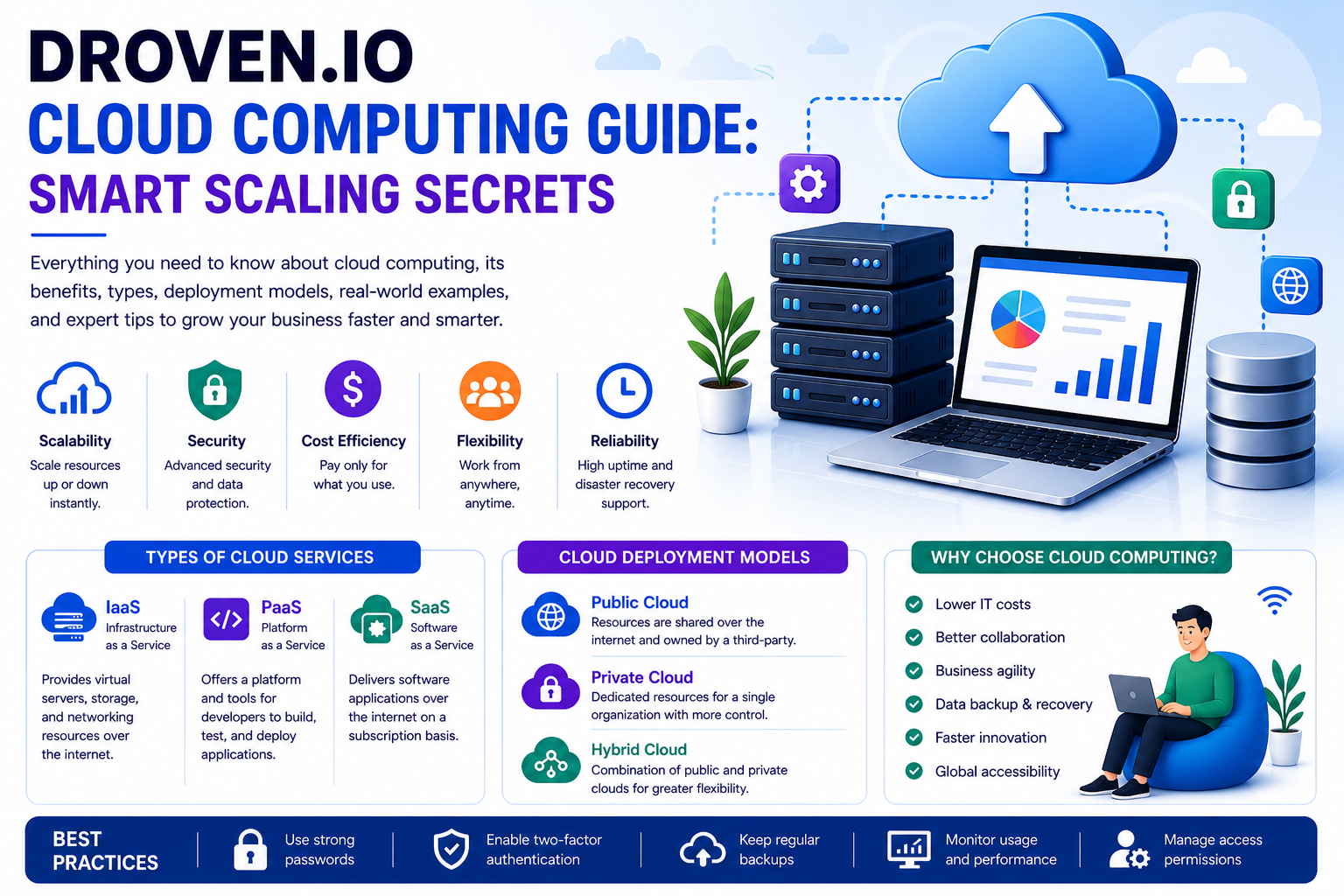
The Droven.io cloud computing guide breaks down how modern businesses use cloud systems to stay fast, secure, and scalable without investing heavily in physical infrastructure.
If you want your online business to grow smoothly without technical headaches, understanding cloud computing is no longer optional.
The Shift from Traditional Systems to Cloud Power
Businesses used to rely on physical servers stored in offices or data centers. These systems worked, but they came with limitations:
- High upfront costs
- Maintenance headaches
- Limited storage capacity
- Difficult scaling
- Risk of data loss
Cloud computing replaced this outdated model.
Instead of owning hardware, businesses now rent computing power online. This allows them to scale instantly and operate more efficiently.
The Droven.io cloud computing guide highlights this shift as one of the biggest changes in modern digital infrastructure.
What Cloud Computing Really Means
Cloud computing is simply the delivery of computing services over the internet.
These services include:
- Storage
- Databases
- Hosting
- Networking
- Software applications
Instead of saving everything locally, data and systems are stored on remote servers.
You already use cloud computing daily:
- Watching YouTube
- Using Google Drive
- Sending emails via Gmail
- Attending Zoom meetings
Cloud technology powers all of this behind the scenes.
Breaking Down Cloud Service Models
To understand cloud systems properly, you need to know the three main service models.
Infrastructure as a Service (IaaS)
IaaS provides virtual infrastructure.
Businesses can access:
- Servers
- Storage
- Networking
without buying physical equipment.
Real-Life Example
A news website suddenly goes viral after publishing a trending story.
Instead of crashing, it automatically scales server capacity using cloud infrastructure, keeping the site stable under heavy traffic.
The Droven.io cloud computing guide explains IaaS as the backbone of scalable online systems.
Platform as a Service (PaaS)
PaaS provides tools for developers to build applications.
The provider handles:
- Servers
- Updates
- Security
Developers focus only on creating features.
Real-Life Example
A startup building a ride-sharing app uses cloud platforms to deploy updates quickly without worrying about backend maintenance.
This speeds up development significantly.
Software as a Service (SaaS)
SaaS delivers software through the internet.
Examples include:
- Gmail
- Canva
- Dropbox
- Slack
Benefits:
- No installation
- Easy access
- Automatic updates
- Affordable subscriptions
The Droven.io cloud computing guide positions SaaS as the easiest entry point for beginners.
Why Cloud Computing Is a Game-Changer
Cloud computing solves real problems businesses face daily.
Cost Efficiency
Businesses no longer need to invest heavily in:
- Hardware
- IT staff
- Maintenance
- Infrastructure upgrades
Cloud services operate on a pay-as-you-use model.
Remote Work Made Simple
Cloud systems allow teams to work from anywhere.
Employees can:
- Access files
- Collaborate in real-time
- Manage projects remotely
Real-Life Example
A freelance team managing multiple clients uses cloud tools to share documents, track tasks, and communicate efficiently without needing a physical office.
Strong Data Security
Cloud providers invest heavily in security.
They offer:
- Encryption
- Backup systems
- Threat monitoring
- Access control
The Droven.io cloud computing guide emphasizes that security improves further when users follow best practices.
Instant Scalability
Businesses can increase or decrease resources instantly.
This is especially useful during:
- Sales events
- Traffic spikes
- Product launches
Cloud systems adjust in real-time, unlike traditional infrastructure.
Understanding Cloud Deployment Options
Different businesses need different levels of control.
Public Cloud
Shared environment managed by providers.
Best for:
- Startups
- Bloggers
- Small businesses
Private Cloud
Dedicated system for one organization.
Best for:
- Banks
- Healthcare
- Government sectors
Hybrid Cloud
Combination of public and private systems.
Allows:
- Security + flexibility
- Better control + scalability
The Droven.io cloud computing guide often recommends hybrid models for growing businesses.
Challenges You Should Not Ignore
Cloud computing is powerful, but it is not perfect.
Internet Dependency
Without stable internet, cloud systems become difficult to use.
Misconfigured Security
Many breaches happen due to poor setup, not weak platforms.
Cost Mismanagement
Unused resources can increase monthly bills.
Practical Tip
Always monitor:
- Storage usage
- Server activity
- Active services
Small adjustments can save significant costs.
Step-by-Step Guide to Start Using Cloud
Beginners can follow this simple approach from the Droven.io cloud computing guide.
Step 1: Define Your Needs
Ask yourself:
- Do I need hosting?
- Storage?
- Collaboration tools?
Step 2: Start Small
Begin with:
- Free cloud tools
- Basic hosting
- File storage platforms
Step 3: Compare Providers
Look at:
- Pricing
- Support
- Security
- Performance
Step 4: Focus on Security
Always:
- Use strong passwords
- Enable two-factor authentication
- Backup important data
Industries Using Cloud Computing
Cloud technology is everywhere.
Healthcare
Used for:
- Patient records
- Online consultations
- Data sharing
Education
Used for:
- Online classes
- Assignments
- Collaboration
E-Commerce
Used for:
- Payment systems
- Inventory
- Traffic handling
Entertainment
Used for:
- Streaming
- Gaming
- Live content
Cloud infrastructure powers modern digital experiences.
Future of Cloud Computing
Cloud technology is evolving rapidly.
Key trends include:
- AI-powered cloud systems
- Edge computing
- Green data centers
- Multi-cloud strategies
The Droven.io cloud computing guide highlights these trends as the future of digital transformation.
People Also Ask
What is cloud computing in simple terms?
Cloud computing means using internet-based services instead of relying on physical hardware.
Why is cloud computing important?
It helps businesses save money, scale easily, and improve performance.
Is cloud computing safe?
Yes, but security depends on proper setup and best practices.
Can beginners use cloud computing?
Absolutely. Many tools are designed for non-technical users.
What is the biggest benefit of cloud computing?
Scalability — the ability to grow or reduce resources instantly.
Smart Tips Before Choosing a Cloud Service
Before choosing a platform:
- Compare pricing carefully
- Check support quality
- Understand backup options
- Plan for future growth
You can also improve your website structure by linking related content like hosting for better SEO performance.
Final Thoughts
Cloud computing is not just technology — it is a strategy for growth.
It allows businesses to move faster, scale smarter, and operate more efficiently in a competitive digital environment.
The Droven.io cloud computing guide stands out because it simplifies complex ideas into practical knowledge anyone can use.
If you want your business to grow without limits, cloud computing is the foundation you need.